10 Supercars The 2025 Audi RS3 Can Spank Around The Nürburgring
\
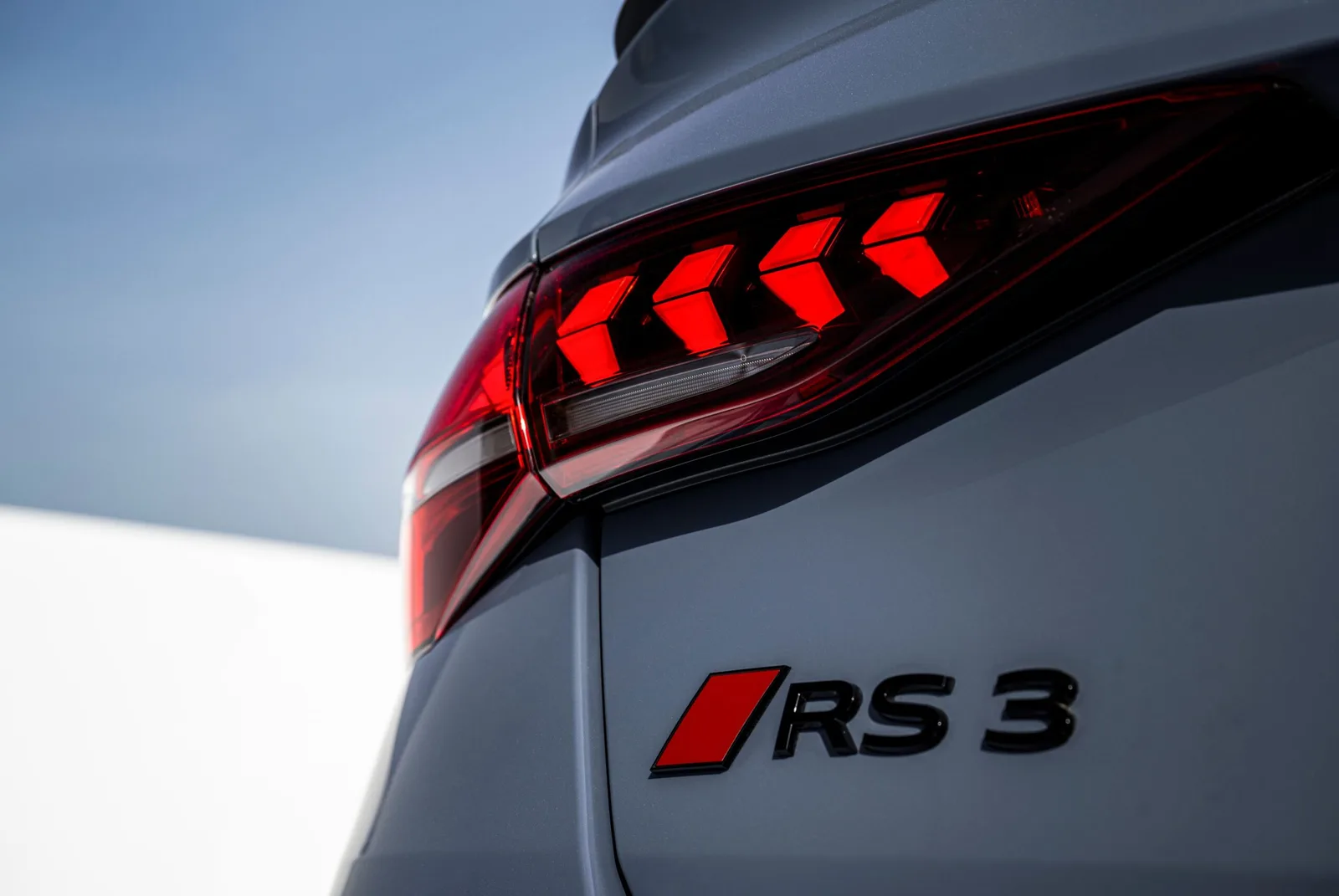
Audi’s latest 5-cylinder quattro-rocket recently blasted its way to a 7:33.123 lap of the Nürburgring, making it the record holder in the AWD compact class and smoking no less than at least 10 incredible supercars in the process. It wasn’t long ago when a lap time in this territory was the stuff of supercar legends priced well into six-figure territory – but modern engineering and tech are bringing higher-than-ever levels of performance to lower and lower price points, and the 2025 Audi RS3 is a great example of the trend.
A recent update has left the RS3 quicker and sharper than ever, while new body parts, visual enhancements, and a new steering wheel freshen things up while improving handling and dynamics compared to last year’s car by way of chassis optimizations and the use of a new secret weapon which lives between the rear wheels.
2025 Audi RS3
Base Trim Engine
2.5L turbo Inline 5
Base Trim Drivetrain
All-Wheel Drive
Base Trim Transmission
7-speed Dual-Clutch Automatic
Base Trim Horsepower
400 hp
Base Trim Torque
369 lb-ft
0-60 MPH
3.8 sec
Top Speed
180 mph
Expand
That secret weapon is a device called the RS torque splitter, which can precisely divide torque across the vehicle’s rear axle in response to a variety of variables and the driver’s currently selected dynamic mode. The torque splitter has been around since 2021, but recent advancements for the 2025 model have given the RS3 a real advantage in terms of handling and lap times. Working in sync with adaptive suspension and traction controls, the torque splitter is basically a rear differential that uses a multi-plate, computer-controlled clutch on each rear driveshaft. This gives the RS3’s rear axle precise control over the split of engine torque applied between the left and right wheels.
2025 Audi RS3 Sedan Quattro
MSRP
$63,400
Engine
2.5-liter 5-cylinder turbo
Transmission
7-speed dual-clutch automatic
Horsepower
394
Torque
369 lb-ft
0-60 mph (manuf.)
3.6 seconds
Top Speed
180 mph
Curb Weight
3,627 lbs
Steer left, and the RS3 sends more torque to the right rear wheel (and vice versa), preparing the car for easy throttle steering and reduced understeer. Simultaneously, the inside rear wheel is slightly braked, which helps pull the front of the car tighter into the bend. In real-time, the adaptive suspension calculates the required forces to keep the car stable and flat in the process. The nutshell? The RS3’s suspension, AWD system, and rear axle can think independently and talk to one another to put even bigger grins on the driver’s face.
In the process, these systems enable the RS3 to beat these 10 supercars around the Green Hell.
Related
2025 Audi RS3 Beats The M2 On The ‘Ring And On The Sticker
Audi’s awesome five-pot gets even better.
10
Koenigsegg CCX
Nürburgring Lap Time 7.33:55
Koenigsegg CCX
Engine
4.7-liter twincharged V8
Transmission
6-speed sequential
Horsepower
806 hp
Torque
693 lb-ft
Thanks to an infamous appearance on Top Gear, the Koenigsegg CCX earned a reputation as a tricky car to drive fast. The exclusivity and price tag of this Swedish cruise missile are just as extreme as its ultralight hardware, sufficient in the late 2000s for a 7.33:55 lap. Today, that’s just a half-second or so slower than the RS3, which you could buy at least eleven of for the same money.
9
Lexus LFA
Nürburgring Lap Time 7:38
Lexus LFA
Engine
4.8-liter V10
Transmission
6-AT
Horsepower
553 hp
Torque
354 lb-ft
The Audi RS3’s turbo five-cylinder exhaust note is pretty sweet, but have you ever heard a Lexus LFA’s V10 singing away at 9,000 rpm? The bespoke supercar engine will go down in history as one of the best-sounding engines ever built by humankind, thanks in no small part to a special acoustical treatment by Yamaha. Even with 553 horsepower and all those shrieking revs, this early 2010s poster car would still cross the finish line about 5 seconds after today’s RS3.
Related
10 Special Car Engines Yamaha Had A Hand In
Yamaha is the company behind many Toyota performance engines, but it’s also been involved in some very special engines for other automakers.
8
Mercedes-Benz SLS AMG Black Series
Nürburgring Lap Time 7:45
SLS AMG Black Series (2014)
Engine
6.2-liter V8
Transmission
7-AT
Horsepower
622 hp
Torque
468 lb-ft
The crackling snarl of the big-displacement German V8 was the soundtrack of many AMG models in the mid-2010s – including the 622-horsepower SLS AMG Black Series. Its ‘speedshift’ transmission could change gear in milliseconds, and its exhaust note sounded like a Gatling gun. With a starting price around $275,000 a decade ago, today’s sub-$70,000 RS3 can lap the ring nearly 12 seconds faster.
7
Nissan GT-R Spec-V
Nürburgring Lap Time 7:34.46
Nissan GT-R (2009)
Engine
3.8-liter V6 twin turbo
Transmission
6-AT
Horsepower
480 hp
Torque
430 lb-ft
Sadly, Nissan recently discontinued the GT-R; may its turbocharged sheet metal soul rest in peace. Though its departure closes the book on a long and storied history of technical achievements and motorsports success, we do have some pretty stellar lap times to look back upon with fondness. Of particular interest is the GT-R Spec V, a flagship supercar whose lap time comes within about a second of the latest RS3.
The GT-R returned the ‘Ring numerous times over the years, setting several times quicker than this, but several of those were run by Nissan and their validity remains disputed to this day.
6
Porsche Carrera GT
Nürburgring Lap Time 7:39.49
Porsche Carrera GT (2003)
Engine
5.7-liter V10
Transmission
6-MT
Horsepower
605 hp
Torque
435 lb-ft
Though Porsche recently gave Carrera GT owners a tire upgrade to help improve the capability of the machine with modern tire tech, original units used the best tires available at the time. In 2003, the Carrera GT’s first year of production, its first official lap time came in at just under 7:40 with tire tech from 2 decades back, rear-wheel drive, and a six-speed stick. Today, with half as many cylinders, twice as many doors, considerably less power and considerably better tires, the RS3 would cross the finish line about 8 seconds sooner.
We’d be remiss not to mention, however, that on modern tires, the Carrera GT went some 20 seconds quicker than it did in 2003.
5
McLaren 650S Spider
Nürburgring Lap Time 7:35
McLaren 650S (2015)
Engine
3.8-liter V8 twin turbo
Transmission
7-AT
Horsepower
641 hp
Torque
500 lb-ft
With a starting ask exceeding a quarter-million dollars, the $280,000 McLaren 650S was a rolling showcase of the very latest in motorsports-derived supercar tech of the day. In the mid-2010s, the 650s offered up 641 horsepower, rear-drive, and extremely lightweight construction, complete with mid-engine handling and a trick suspension. Result? A lap time of 7:35, just over 3 seconds behind the RS3.
Related
2025 McLaren Artura Spider Vs. 2015 McLaren 650S Spider – Is New Always Better?
Depreciation can be your friend and land you a sweet deal on a used supercar.
4
Audi R8 GT
Nürburgring Lap Time 7:34
Audi R8 GT (2012)
Engine
5.2-liter V10
Transmission
6-AT
Horsepower
560 hp
Torque
398 lb-ft
Even the top-performing R8 GT with V-10 power from the early 2010s would have trouble keeping up with the brand’s entry high-performance car today. The R8 GT had a positively screaming V10 engine with 560 horsepower and came without quattro AWD to keep the weight down. Today, for less than half the asking price (and with double the seating), the RS3 puts down a lap time about 2 seconds quicker.
Related
This Mid-Engined Audi Ran So Lamborghini Could Soar
The Audi that turned Lamborghini into a Ferrari Fighter
3
2017 Acura NSX
Nürburgring Lap Time 7:36
Acura NSX (2017)
Engine
3.5-liter V6 turbo hybrid
Transmission
9-AT
Horsepower
573 hp
Torque
476 lb-ft
The Acura NSX’s spec sheet reads like a tech-enthusiast car buff’s Christmas wish list. Hybrid turbo engine? Check. Super-Handling AWD with hybrid motor assist? Check. Lightweight construction and handling designed to rival the world’s very best? You bet. At $155,000 for starters, this 573-horsepower exotic was a pricey proposition. Today, look for an RS3 at about half the price, with a lap time about 4 seconds faster.
2
Lamborghini Gallardo Superleggera LP 570-4
Nürburgring Lap Time 7:38
Gallardo LP570-4 Superleggera (2014)
Engine
5.2-liter V10
Transmission
6-AT
Horsepower
562 hp
Torque
398 lb-ft
Do you like discreet cars that are very reasonable and don’t make a scene? If so, this particularly spicy Lamborghini Gallardo definitely isn’t your style. Running a 5.2-liter V10 and 562 horsepower, this was a lightweight, rear-drive version of the ‘smaller’ Lamborghini of the day, and performance was as furious as the exhaust note. The 7:38 lap time trails the RS3 by around 6 seconds.
Related
The Original Baby Lambo, The Gallardo, Just Turned 20
Sant’Agata looks back on two decades of its first V10-powered supercar.
1
Chevrolet Corvette C6 ZR1
Nürburgring Lap Time 7:41.50
Chevrolet Corvette ZR1 (2019)
Engine
6.2-liter V8 supercharged
Transmission
6-MT
Horsepower
638 hp
Torque
604 lb-ft
The Corvette ZR1 of the late 2010s sent the C6 generation off with a bang. This performance bargain combined the efforts of a supercharged 6.2-liter V8 with 640 horsepower, a six-speed stick, and every technical trick up the sleeves of GM’s performance engineers. Designed to challenge the world’s fastest machinery at a fraction of the price, the C6 ZR1 was one of the top-performance cars of its day. Today, it’d cross the finish line about 10 seconds after the RS3.
Related
Ranking Every Generation Chevrolet Corvette ZR1 By Top Speed
The ZR1 is the Corvette’s most powerful model, so let’s see how fast every generation can go.
Sources: Sport Auto, Auto Bild SportsCars, Best Motoring, Evo Magazine, Audi
\