Germany’s Failed Mazda Miata Rival Was Powered By A Turbocharged Audi V6
\
The Mazda MX-5 Miata is one of the most famous sports cars in the world. With a history stretching back decades and over a million units sold worldwide, the Miata has left an indelible mark on the automotive industry.
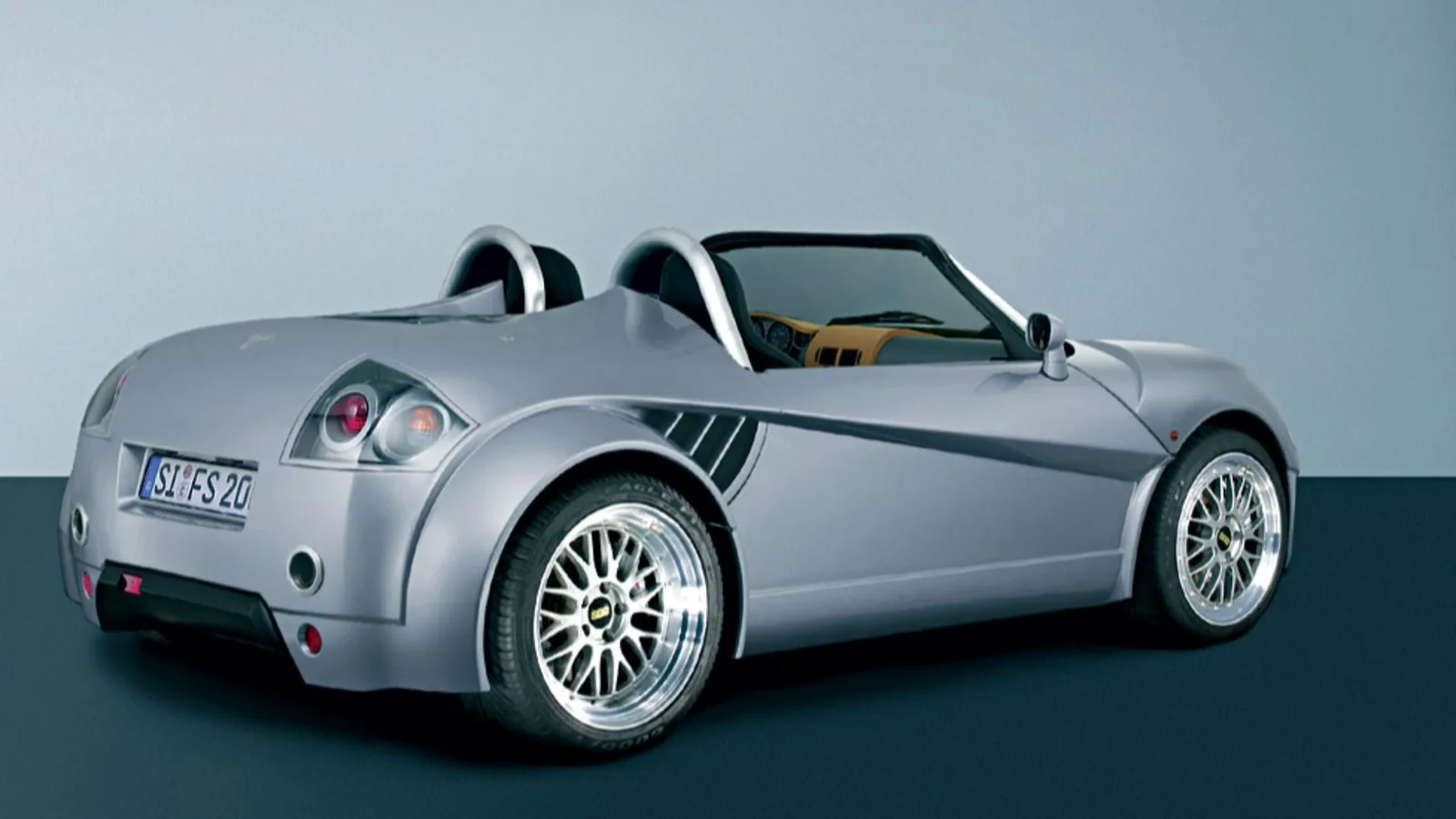
Over the course of history, there have been plenty of cars that have taken inspiration from the Miata: a lightweight, affordable, entry-level sports car that appeals to young people and provides an accessible entry point into fun, engaged motoring. In Germany in the early 2000s, there was one curiously-named roadster that followed this blueprint, but did not achieve a meaningful degree of commercial success: the YES! (Young Engineers Sportscar) Roadster.
2025 Mazda MX-5 Miata
Base MSRP
$29,330
Base Trim Engine
2.0-Liter I4
Base Trim Horsepower
181 HP @ 7,000 RPM
Base Trim Torque
151 LB-FT @ 4,000 RPM
Base Trim Transmission
6-Speed Manual
This article focuses on the history and features of the YES! Roadster, as well as other YES! models and other lesser-known German sports cars.
Meet The YES! Roadster
The YES Roadster In Numbers
Model
1st Gen
2nd Gen
Engine
1.8L inline-four
3.2L V6
Horsepower
286 hp
350 hp
Torque
258 lb-ft
358 lb-ft
0-60
4.1 seconds
3.9 seconds
Top Speed
164 mph
176 mph
The Roadster was first introduced to the world at the Geneva Motor Show in 2003. It featured an unconventional door design that’s somewhere between a scissor and a butterfly door, opening upwards and slightly outwards. Two generations of the Roadster were created over the course of the company’s short lifespan. The first (in production between 2003 and 2006) was powered by a 1.8-liter inline-four engine sourced from Volkswagen, paired with a 5-speed manual transmission.
The second generation (produced between 2006 and 2009) was larger than the first, and powered by a 3.2-liter V6 engine sourced from Audi, which is why the car was also sometimes referred to as the Roadster 3.2. This engine was available in either a naturally aspirated or turbocharged configuration, and two choices of transmission were available.
All models with the 5-speed automatic transmission were exclusively powered by the naturally aspirated engine, while the turbocharged cars gained an additional gear.
Other YES! Models
While the Roadster may be the YES! model that gained the most attention from the automotive world, there are two other cars in the brand’s lineup: the Clubsport and the Cup/R.
Clubsport
The Clubsport was the very first YES! model to be produced, being initially introduced as a prototype in 2001. It was powered by the same 1.8-liter Volkswagen engine found in the first generation of the Roadster, paired with a 5-speed manual transmission. The Clubsport was discontinued in 2006, as the second generation of the Roadster was being introduced.
Cup/R
The YES! Cup/R is a track-only version of the Roadster, with most non-essential components having been removed in order to save weight. These include the doors, which means the driver has to get in the car from the top, in a similar fashion as a racing car. The engine was still the 1.8-liter Volkswagen, but this time it was given a performance upgrade, which boosted the power output to 340 hp. The 5-speed manual transmission remained unchanged. The Cup/R was in production between 2003 and 2006.
A Brief History Of YES!
Details about this small, short-lived company are few and far between. However, we do have some information about its history and origins. It was founded in 2000 by two students, Herbert Funke and Philipp Will. Funke and Will were working on their thesis while completing their studies at the Cologne University of Applied Sciences, and they came up with the design that would eventually become the YES! Clubsport. The initial idea quickly grew into a full-blown business, and in 2001 the two students were able to present their first completed prototype at the Frankfurt Motor Show.
YES! cars were built by hand, in a restored hangar next to a small airport in Saxony, Germany. Aside from the Clubsport, the company managed to design and produce two other models before declaring bankruptcy in February 2009. Its assets were bought by enthusiast Marco Kunz, who was one of the first people to own a second-generation Roadster. His plan was to restart production of the 3.2 Roadster. However, this ultimately did not come to pass. He did, however, manage to produce a few replacement parts for existing cars.
Other Obscure German Sports Cars
The YES! Roadster and its stablemates are not the only lesser-known sports cars to emerge from the German automotive industry. Over the course of history, there have been several lesser-known gems produced by German firms, from rare BMWs to two-stroke cars. Here are three of them: the Isdera Imperator 108i, the Melkus 1000, and the Alpina Roadster S.
Isdera Imperator 108i
The Isdera Imperator 108i was the product of a fascinating career: after a period working at Porsche and a few turbulent years with German car design firm bb Autos, designer Eberhard Schulz decided to strike out on his own and start a new company. He named the business Isdera (short for “Ingenieurbüro für Styling, Design und Racing”, German for “Engineering Office for Styling, Design and Racing”).
The new company’s first two cars were both based on a Mercedes-Benz concept Schulz had designed a few years earlier, the CW 311. The first one was an open-top version called the Spyder, while the second was more faithful to the original; Schulz renamed this car the Imperator 108i, and built 30 units over the following decade. The Imperator was initially powered by a Mercedes-sourced engine: the 5.0-liter M117 V8, which produced 300 hp. Later on, several other Mercedes and AMG engines were used as well, including the 5.6-liter version of the M117 plus a 5.6-liter and 6.0-liter AMG V8.
Related
8 German Cars You’ve Never Heard Of
Oddball BMWs, 16-cylinder opulence, and something incredibly frugal.
Melkus RS 1000
The Melkus RS 1000 was the brainchild of the man it was named after, former racing driver Heinz Melkus. He founded the Melkus company in 1959, and after exclusively building race cars for the first ten years, in 1969 he decided to build a road car. The result was the RS 1000, a striking creation with gullwing doors which blended characteristics of road cars (such as the Ferrari 250 GTO, which it vaguely resembles) and race cars.
The RS 1000 was powered by a curious choice of engine: a three-cylinder, two-stroke unit sourced from local manufacturer Wartburg. The engine gave the car far less power than its looks might suggest: just 68 hp. The RS 1000’s low power output was balanced out by its very low weight (1,500 pounds, or less than a first-gen Lotus Elise). The RS 1000 remains a veritable rarity, with just 101 units produced in total.
Alpina Roadster S
Most car enthusiasts are familiar with Alpina, BMW’s sister brand that produces low-volume, high-performance variants of BMW models. The Roadster S is one of Alpina’s rarest creations, based on the Z4. It was powered by a larger engine than the original car (3.4 liters as opposed to 3.0), and replaced the original automatic transmission with a six-speed manual built by ZF Friedrichshafen. The exhaust system was also swapped out for an upgraded stainless steel unit, produced by Boysen.
Related
The Most Powerful Non-Hybrid BMW Ever Is Here, And It Wears An Alpina Badge
It’s the final Alpina before the brand becomes wholly owned by BMW.
Two trim levels were available: Standard and Luxury. The Luxury trim came with extra tech features, including Bluetooth connectivity and navigation. Customers could also opt to have the Sport pack added, which included a thicker anti-roll bar and increased front negative camber. The Roadster S acted as a kind of predecessor for the Z4 M, which arrived on the market in 2006 (just as the Roadster S was being phased out, after only 370 units built).
Sources: NetCarShow, Supercars.net, Melkus, Alpina, UltimateCarPage, FastestLaps
\