The Audi-Powered Supercar Concept With Two Steering Wheels
\
In the automotive world, few things are as exciting as concept cars. These design exercises are unbound by the rules of the road and conventional design wisdom. They allow creatives to push the boundaries in radical new ways while also paying homage to the vehicles of the past, and despite rarely having much hope of production, they get the public and companies excited about things to come.
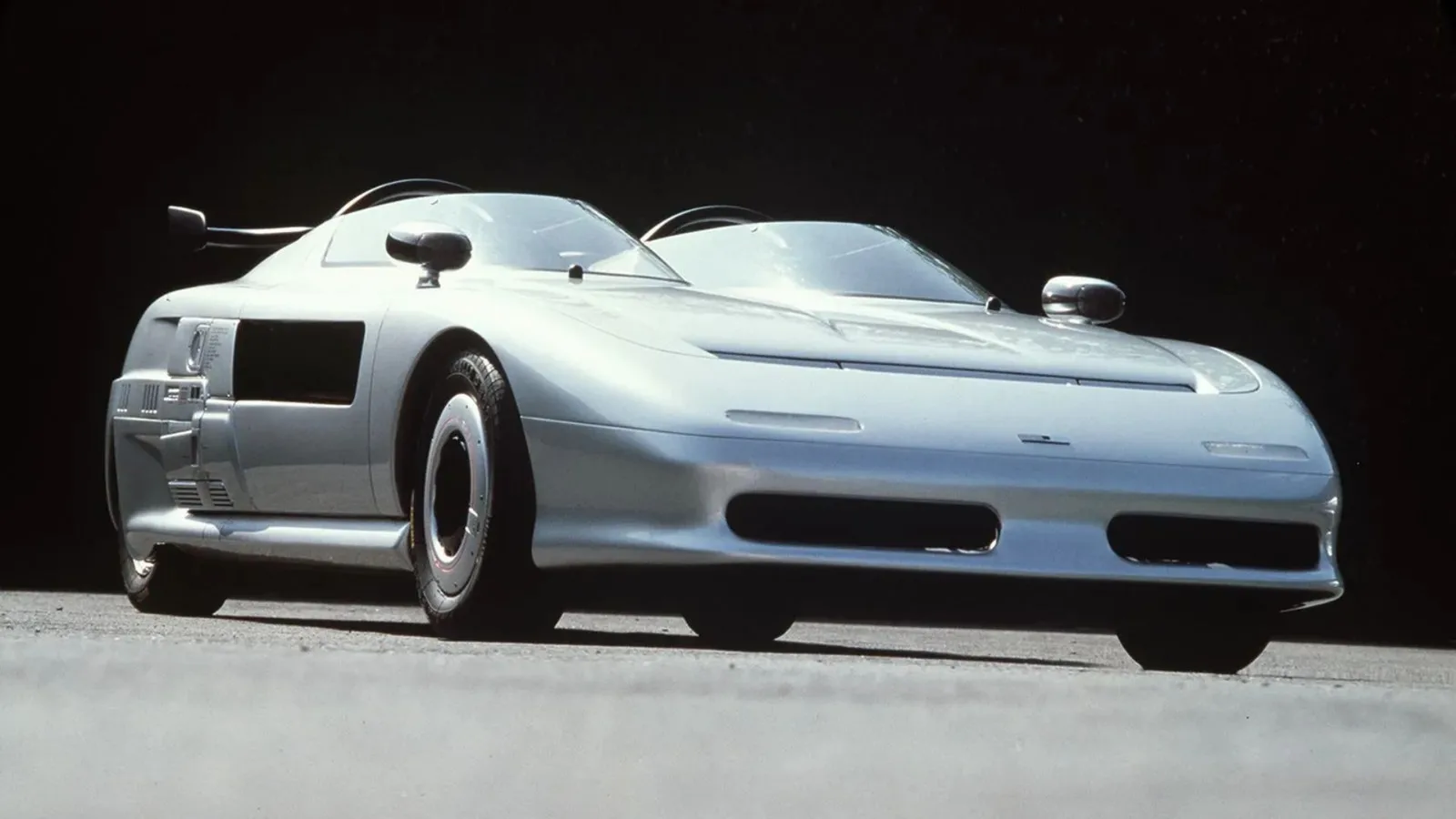
Few creatives have excelled at the art of concept car design like Giorgetto Giugiaro, the famed designer behind some of history’s most iconic cars. However, even deep in his catalog there have been winners and losers, and the 1988 Italdesign Aztec is most certainly a winner. A true blend of sci-fi aesthetics and real-world engineering, the Aztec was a functional, thought-provoking vehicle that imagined where the future of sports would take us. It was bold, radical, and undoubtedly beautiful, and its impact proved so profound, it even made it to a short production run. This is the car’s story.
We look at the inception of one of Italdesign’s most famous concepts, the engineering behind it, and its impact on the public at large.
A Bold Two-Seat Vision
The concept came from a desire to celebrate the 20th anniversary of the Italdesign studio, which had first opened its doors in 1968 under the helm of Giugiaro and Aldo Mantovani. Three concepts were envisioned, and all three received similar, futuristic looks that would have felt at home in Blade Runner or RoboCop.
The first was the Asgard, which essentially looked like a 2100 version of a GM Dustbuster van. The second was the Aspid, a sleek, two-seat coupe with a single roof piece that opened up for entry and exit, and the final was the Aztec, a bold Barchetta coupe that envisioned a future where the driver and passenger were almost completely separated from one another.
Related
One Of Just 19 Nissan GT-R Models Ever Produced By Italdesign Is Up For Sale
This delivery-mile GT-R50 celebrates 50 years of Skyline and is the only way to experience the most exclusive R35 GT-R on earth.
Each passenger had their own compartment with a windscreen and removable roof panel, and at first glance, it even appeared like they had their own steering wheels. However, this turned out to be a command module that could access vital vehicle information as well as hold the controls that allowed the passenger to communicate with the driver. Special codes needed to be entered to display the information, these were located on the side panels, and there were other goodies like an electric screwdriver, electric torch, and air compressor to ensure drivers were ready for any situation.
Additionally, it featured a full leather interior, sleek silver exterior with rear fender skirts, a rally navigation system, Le Mans-style mirrors, and centrally mounted headlights that popped out of the hood. Of the three concepts that debuted at the 1988 Turin Motor Show, this was the only one that ran, and viewers at the show were enamored with the car’s design. Everything about it screamed future luxury, and inquiring minds quickly started to ask what it would take to get it into series production.
Under the Skin: Audi Power and Advanced Engineering
Despite an exterior that gave the car the appearance of taking flight at a moment’s notice, the underpinnings were unsurprisingly grounded in reality. The vehicle was constructed using a mix of aluminum, carbon fiber, and Kevlar, all very cutting-edge for the time, but they were then mounted to a conventional steel ladder-frame chassis.
Initially, it was rumored the model was going to be fitted with a V8, but delays left the company looking for an alternative solution. It eventually settled on an Audi-sourced 2.2-liter turbocharged inline-five out of the Audi Quattro, which can be found mounted horizontally behind the passenger compartment. However, despite the car being prominently labeled with the words « 250 hp », the model made closer to 200 hp in the concept.
Engine
Audi-sourced 2.2-liter turbocharged inline-five
Horsepower
250 hp
Torque
Not officially disclosed
Transmission
5-speed manual
Drivetrain
Lancia Delta Integrale all-wheel drive system
Chassis
Steel ladder-frame
Body Material
Aluminum, carbon fiber, Kevlar
Related
How The All-Wheel Drive King Fell Behind The Competition
You’d think this carmaker would still be crowned the AWD king, but the fact is, it isn’t anymore.
Despite having an Audi powerplant, the company then decided to utilize an AWD system out of a Lancia Delta Integrale instead, likely due to packaging constraints. This rally-inspired setup may have been a bit at odds with the car’s sleek exterior and plush interior, but it promised the model was likely very capable when pushed hard, and everything combined convinced one man that he needed to find a way to get this car on the road.
The Concept’s Limited Production and Lasting Legacy
Mario Miyakawa is a Japanese businessman who has developed a strong legacy in the world of sports through the Compact consulting agency, and throughout the decades he developed a strong relationship with Giugiaro as an advisor on Asian markets. He adored the car so much, that he soon acquired the rights to it from Italdesign and intended to put it into production with a planned run of 50 units.
The production was handled by the Audi tuner Motoren-Technik-Mayer (MTM) to handle heavy lifting, and modifications were made to ensure its road compliance, while performance was also increased to the 250 horsepower number advertised on the vehicle in the first place. Eventually, it was deemed compliant in Germany, but there was a catch: the production version of the concept was going to cost 500,000 Deutsche Marks, or approximately $278,577.
Related
Bugatti EB112 May Have Been Giorgetto Giugiaro’s Strangest Design
The concept is now turning 30 years old on Giugiaro’s 85th birthday.
This was an exorbitant sum for a vehicle many didn’t even know could perform as advertised, and enthusiasm for the model was immediately tempered. Although the exact number is hard to pinpoint, it’s pegged to be around 20, with each one having been painted in metallic silver. Some accessories changed in the production models, like the addition of different sound systems and other technological features, as well as the color of the interiors.
Despite being so rare, they’ve actually come up for sale quite a few times over the years. Bonhams sold one in 2023 with a red interior and Audi head unit, Bring A Trailer sold another in 2020 with a gray interior and much cooler 1990s JBL stereo system, and the same vehicle was sold again through Broad Arrow just last year. Each time, they change hands for hundreds of thousands of dollars with the prices getting higher, proving they’ve been a sound investment.
The Italdesign Aztec’s Five Minutes Of Fame
When we say onlookers to the model were enthralled, we mean it. The car looks straight out of a comic book or TV show and appears like the perfect villain car in a James Bond film or opposite KITT. We aren’t the only ones who think so either, because soon after it was unveiled, it was used in the production of a few films.
Related
10 Iconic T.V. And Movie Automotive Superstars
Sometimes a movie car co-star steals the spotlight and defines and entire movie.
The first, and most famous, is likely Frankenstein Unbound, a 1990 film about a scientist from the distant future of 2031 (oof), who creates a weapon to bring about world peace but is accidentally sent back in time to the late 1800s, where he meets Dr. Frankenstein and eventually his monster.
The car was perfect for the task, as it was a collision of different time periods, and this was echoed further thanks to its use in an Italian film called A spasso nel tempo, which also focused heavily on time travel and similarly featured the BMW Nazca C2. It joined other cars from the period, like the aforementioned KITT from Knight Rider, the DeLorean DMC-12 from Back To The Future, as well as plenty of other concept cars from the time that envisioned a sleek, unconventional view of transportation in the future.
Related
Giorgetto Giugiaro Says Tesla Cybertruck Design Is A Market Necessity
He’s absolutely convinced that its styling will be key to its success, but given Musk’s own uncertainty, is that really enough?
While the vehicle has never reached the same level of acclaim as these models, it’s a reminder of the power of designers pushing boundaries. Who’s to say that the foundation laid by cars like the Aztec didn’t pave the way for models like the current Tesla Cybertruck? Or modern-day Barchetta models from McLaren or Ferrari? It was, and is, a trendsetter, and if you ever see one in person, know you’re witnessing a design icon.
Sources: Italdesign, Bring A Trailer, Bonhams
\