This Mid-Engined Audi Ran So Lamborghini Could Soar
\
Platform sharing is nothing new in the motoring world. Manufacturers often do it to optimize production methods and save on costs. Sometimes the results are less than ideal. Every so often, however, sharing technologies and business resources delivers something amazing.
When the Volkswagen Group acquired ownership of Lamborghini and placed it under the auspices of the Audi division, some feared that the flamboyant and extroverted Italian brand would be watered down into a competent but soulless Audi clone. They couldn’t have been more wrong. This is the story of how Lamborghini became a global success thanks in part to the careful curation of the brand by the VW Group.
With the Lamborghini Temerario debuting with a bespoke twin-turbo hybrid V8, we look back at how the VW Group’s influence helped this marque reach new heights over the past two decades.
The Gallardo and the R8
Back in the late 1990s, Lamborghini found itself in a financially perilous state. This was nothing new for a marque that had been lurching from one disaster to the next since the 1973 oil crisis, but this time it needed serious rescuing. As luck would have it, the Volkswagen Group was buying up companies to bolster its business, and it acquired Lamborghini in late 1998.
This set the scene for a raft of major changes at Lamborghini. The low-volume V12 Diablo range-topper was replaced with the far more polished Murcielago in 2001. To the relief of many critics, it had just the right blend of Audi/Lamborghini genes to deliver a white-knuckled driving experience with a dash of usability and reliability thrown in.
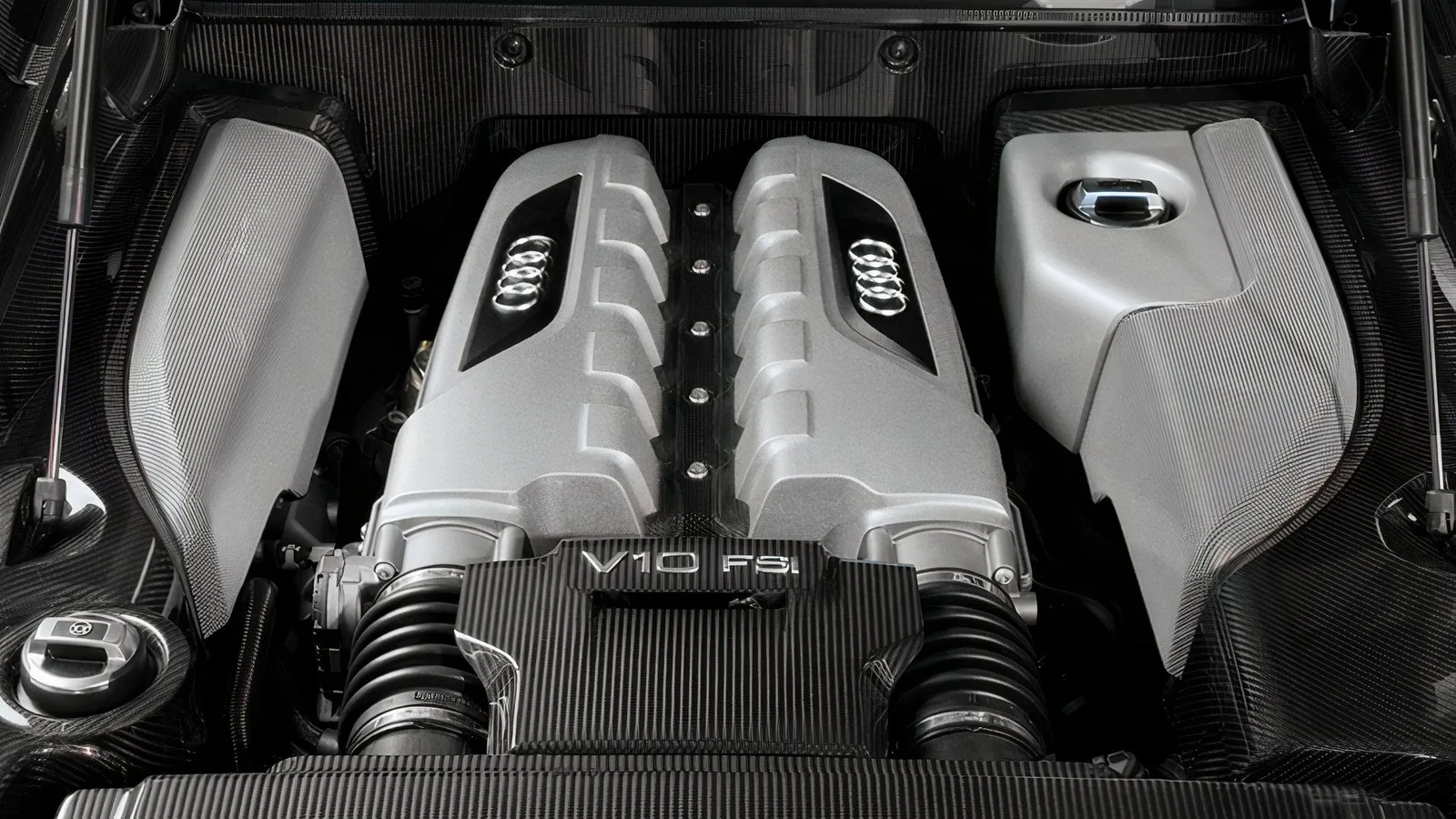
The next all-new model was the V10 Gallardo. Introduced in 2003, it was intended to be a volume seller and featured a new V10 engine and styling cues from the 1995 Cala Concept car. Now, with Audi’s technological expertise, and the VW Group’s financial backing, it could challenge Ferrari head-on. Developing a new 493-hp V10 and a mid-engined platform is a big undertaking for any manufacturer, and to make it financially viable, the VW Group decided to adapt it for use in their upcoming Audi supercar, the R8.
Brand hierarchy is key to ensuring you don’t cannibalize sales from within your own offerings, and Audi went to great pains to ensure that the R8 didn’t step on the toes of the Gallardo. First up was the V8-powered R8, released in 2007 with the 414-hp 4.2-liter V8 from the B7 RS4 sedan. It was more than a match for the E92 BMW M3 and was often compared to the contemporary Porsche 911 in terms of performance and handling.
Of course, by this point, Gallardo had benefited from several updates and was now producing 513 hp. By the time the R8 got a V10 in 2009, the Gallardo had been upgraded, too. This trend continued throughout production, with acceleration times and peak power figures always slightly favoring the Lambo.
Clearly, the strategy worked. The Gallardo became the best-selling Lamborghini of all time, and the R8 showed the world that Audi wasn’t just about straight-line speed and understeer.
Related
The Original Baby Lambo, The Gallardo, Just Turned 20
Sant’Agata looks back on two decades of its first V10-powered supercar.
The Huracan
By the early 2010s, Lamborghini was experiencing a resurgence like never before. The Gallardo was a huge success, the Aventador arrived in 2012 in a flurry of V12 noise and exhaust flames, but it was the Gallardo’s replacement, the Huracan, that once again secured the financial future of this illustrious marque.
The Lamborghini Huracan arrived in 2014 and continued building on the success of its predecessor. It used a slightly tweaked version of the Gallardo’s 5.2-liter V10, now producing 602 hp in base trim. The second-generation R8 arrived two years later. It was now a V10 only, but to keep the brand hierarchy intact, the standard models produced 533 hp, with only the top trims getting the full 602 hp. Rear-wheel-drive editions of both cars were offered during production, the R8 getting 533 hp, while the Huracan was available in either 572 or 602-hp versions.
The Huracan once again sold in greater numbers than ever before, even eclipsing the Gallardo. The second-generation R8 also exceeded expectations, with 45,949 units sold of both generations.
The Temerario
Lamborghini Temerario
Engine
4.0-liter twin-turbo V8 PHEV
Horsepower
907 hp
Torque
590 lb-ft
0-60 mph
2.7 seconds (estimated)
The Temerario is the latest in this line of ‘entry-level’ Lamborghini supercars. It is due to begin production in 2025 and features a newly designed 4.0-liter hybrid twin-turbo V8 that produces a combined 907 hp and revs to a manic 10,000 rpm. It is a cutting-edge supercar that would never have seen the light of day had the VW Group not given it the framework and financial backing to allow it to succeed.
Related
A Deep Dive Into The Lamborghini Temerario’s New V8 Powertrain
This plug-in hybrid will be one for the books.
History Repeats Itself
There is no Audi equivalent of the Temerario just yet, but a recent announcement from Audi boss Gernot Döllner suggests that this is unlikely to be the case for much longer. It looks as though a new Audi R8 supercar is currently being developed that will use the Temerario’s advanced new twin-turbo hybrid V10. It should debut in late 2027, by which time the Temerario will be due for a mid-lifecycle update, ensuring it remains at the top of the pecking order.
That is exactly what happened with the Gallardo and first-gen R8. Clearly, this platform-sharing formula is proving to be a winner for both companies. We can’t wait to see what they develop next.
Sources: Audi, Lamborghini, Volkswagen
\