Will Americans Lose The BMW 3 Series And Audi Q5?
\
We’ve been writing a lot about tariffs hitting the car market. Will they happen? Won’t they happen? If you thought tariffs on European cars are going away, not so fast. On Monday, President Trump told Politico:
“We are going to be doing automobiles, which you’ve known about for a long time,” said Trump during a press briefing. “We’ll be announcing that fairly soon, over the next few days probably. And then April 2 comes. That will be reciprocal tariffs.”
Whether they’re coming immediately or not, two critical German cars Americans love—to the tune of over 100,000 cars a year—are in the crosshairs.
The Audi Q5 Is Made In Mexico — Which Is Bad News For Audi
Trump’s previous trade agreement between Mexico and Canada, USMCA, requires that 70 percent of components are sourced within North America. However, Audi’s Q5 and Q5 Sportback are made in Mexico, and they don’t meet the minimum threshold for parts.
Audi could be really badly hurt here. A base Q5 runs $45,400, but if you layer in 25 percent tariffs, that’s $56,750. And the Q5 represents a whopping third of all Audi’s sales in the U.S.
Paul Waatti, a director of industry analysis at AutoPacific, says Audi is especially pinched by the tariff formula, “and there is no easy workaround to shift production elsewhere.” By that, Waati is pointing to the idea that Audi might try to make the Q5 at other plants around the globe, and rather than make the car in Mexico, export it from Europe. But in an analyst call today with Cox Automotive, the group warned that we don’t yet know what the tariff situation will be like for cars made in the EU. Tariffs on cars sold between Europe and the U.S. may be lower than from Mexico. Audi’s biggest problem, Waatti points out, is that it “has zero U.S. production capacity.”
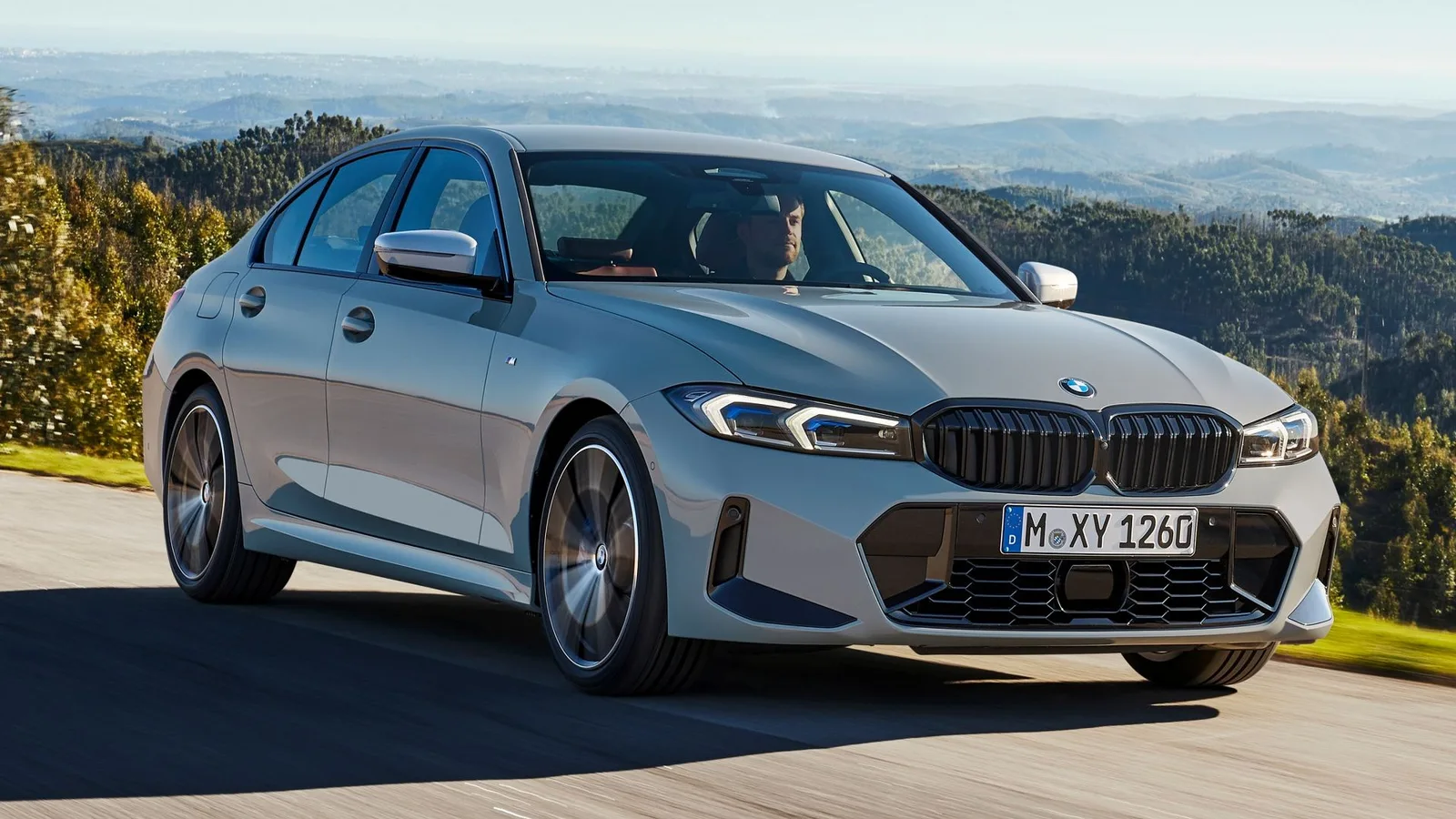
BMW’s 2 And 3 Series—And Some X3s—Are Also Made In Mexico
BMW
The good (ish) news is that BMW has promised not to pass along tariff costs to its 2 and 3 Series cars. But the promise is only until May 1. BMW already makes some X3 cars in Mexico, too, and according to Cox Automotive analyst Charlie Chesbrough, BMW has just been eating that extra cost, “So that there wouldn’t be an impact on the price of the vehicles.”
Carmakers, you might have guessed, don’t like losing money. While BMW makes a lot of its crossovers in South Carolina, Michael Tyndall, head of automotive equity research at HSBC, warned recently that BMW “seems to be more exposed than peers” on tariffs. Waatti at AutoPacific said BMW can’t make more in the U.S., either.
“BMW’s Spartanburg plant is maxed out with SUV production for global consumption. Shifting to Europe or elsewhere could potentially be feasible but not ideal — it adds cost and lead time while introducing new trade risk and complexity.”
Who “Wins” In A Trade War?
Mercedes-Benz
Short answer: Not you! But of the German carmakers, Mercedes is slightly better positioned. They do make the GLB for the entire globe in Mexico, but Mercedes might just not bother to bring us that car and instead export it globally, as we’ve just seen Volvo do with one of its sweetest wagons. Mercedes’ Alabama plant once made the C-Class, and it’s possible Mercedes will return to that strategy for its sedans.
But this is more about which carmaker experiences less pain, not which one is poised to really take advantage of the tariff situation. AutoPacific’s Waatti flagged a few brands and models that will do better, however.
Lexus
RX
ES
Cadillac
CT 4/5
XT 5/6
BMW
X3*
Acura
RDX
TLX
Genesis
GV70
G70
*versions made in South Carolina
Waatti commented that he was specifically targeting models that may face some tariffs—or may have just skirted them. “They can offer luxury alternatives without the price inflation tariffs would bring to Mexican-built products.”
Related
Hyundai’s American Investment Started Under Reagan, Not Trump
The President wants to credit the latest investment to tariffs. But it’s more about carmakers acting like carmakers.
TopSpeed’s Take
BMW
Prices are going to go up on both used BMWs in certain segments, and new ones. Ditto, the Q5. There are two reasons for this. Both Waatti and Cox Automotive’s Jonathan Smoke argue that tariffs are going to shrink the number of new cars on the market. Prices rise, naturally, when supply falls. And there’s the added tariff cost, which Cox is pegging at least $3,000 per car on cars from Mexico, and “much more,” if they’re from (possibly) the EU, Japan, and Korea.
Smoke says, “If the tariffs go through this time, by mid April, we expect disruption to virtually all North American vehicle production.” Smoke adds that prices will increase for both new and used vehicles—and used-car prices were already at nearly their highest price for a quarter-century.
Worse, for these cars in particular, the 2 and 3 Series, as well as the Q5, they simply may not be sold in the U.S. at all. Smoke said his expectation is that “Some models will be eliminated if tariffs persist.”
2:36
Related
Top 10 German Cars That Are Very Reliable, Even Used
If your next option is an used German car, you should definitely check these ten cars.
Waatti says that will in turn make those used BMW and Audi models more expensive. “Buyers priced out of new inventory will shift to late-model used, especially CPO. Supply tightens, demand rises — it’s a textbook scenario for price appreciation.”
\